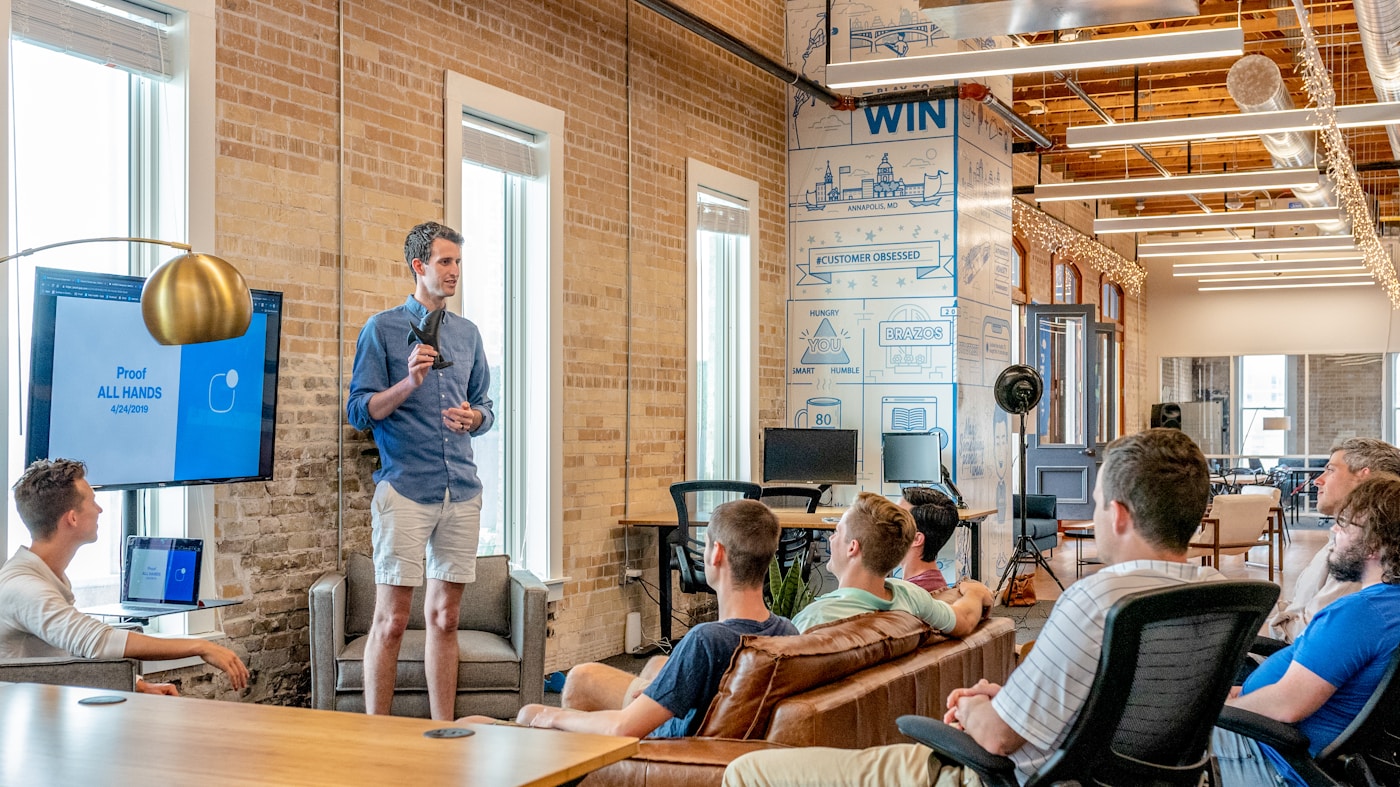




The guest of this week’s episode of the Bankar podcast was Budimir Raickovic, Chairman of the Board of Directors of the Finance Plus agency and President of the Montenegrin Managers’ Association. In conversation with journalist Marko Vukajlovic, Raickovic spoke about his beginnings in business, changes in the labour market, business culture in Montenegro, the work of the Managers’ Association, the global crisis and the chances for Montenegro.
Below we highlight some of the most interesting details.
Growing up in Titograd
“There was a lot more socialising, a lot more sport. I was decent in basketball and football. The outdoor pitches were once full — from the one in Njegos Park to those by the schools. There were not many football stadiums, the main tournaments were there under Gorica. It was a different time: less mobile telephony and more socialising and different challenges. There was not so much stratification.”
Primary schooling and early talents
“I received some awards for literature. I later took up painting as well. That is not close to the world of business, but it is possible that a dose of creativity developed through those talents — because every job requires both initiative and creativity. In my free moments I still read a good book or write something, and that has absolutely nothing in common with economics and business.”
Theory vs. practice
“I belong to the generation on which all experiments were tried — from the army after school, to directed education. I think the economics school produced many quality personnel. Unlike today, attention was also paid to practice. We were required to spend 15 days in some institution and bring a certificate that we had been there — and we went. There were more points of contact. But neither then nor now has the contact between theory and practice been sufficient.”
The new labour market
“I still think that the puzzle between the needs of the real economy and what the education system offers has not been solved. There are constant reforms, but much still needs to be done. In Montenegro we have a surplus of university-educated personnel. We must get used to the fact that having finished some faculty does not mean that you are qualified to perform that activity. The structure of demand for personnel is also changing — new technologies are coming, professions are sought that we did not even know back then: IT, software developers, social media specialists, bloggers, vloggers. Everything is different and we must adapt.”
Founding, company growth, transfer to the son
“It started as one small family accounting firm. It developed over time — it now has around 40 employees. My son de facto manages all those operations. As the older and more experienced one, I can give some advice, but he is the executive director. I am proud. You know, when children reach the point where they can work, manage, create and earn from their work on their own — I am very satisfied. He shows certain abilities and I am grateful for his attitude.”
Youth and experience
“I always say: there are no results without a combination of youth and experience. Youth brings energy, desire, enthusiasm, ambitions for creativity. But we in Montenegro too easily define people as old or young. Sometimes older people are also full of energy, and have the advantage of experience. When these things come together, the synergetic effect produces results.”
Business culture in Montenegro
“We have a problem that young people — and older people too — most often resort to looking for a government job, because entrepreneurship is still not supported to the extent that it really should be. Private business always carries much greater risks than a fixed salary in the civil service. In my view, this is a cultural problem in our country.”
Brain drain
“There is no parent who would like their child to leave. The essence is how to create an environment — and I think Montenegro can do this. 600,000 inhabitants — that is a slightly bigger city. With such capacities and wealth, I think it is only a matter of changing the philosophy and setting priorities on the part of those who make decisions. Young people want a different approach. Nobody likes to go in search of bread, unless there is some challenge. But generally, being here on your piece of land, with this climate and these conditions — it is only a matter of convincing them that there is a chance here.”
Networking of the Managers’ Association
“The Managers’ Association has a strong network — both in Montenegro in the de facto most important sectors, and across the southeast European region through the Southeast European Managers’ Association. We are very proud to be on the executive board of the European Confederation of Managers, although Montenegro is not yet part of the European Union. That organisation is one of the oldest and brings together over a million managers — it is a serious potential.”
Cooperation with the authorities
“Decision makers need to hear the voice of the business community, the economy, young people much more, and to take that into account as input for creating quality public policies. There is no organisation that can change everything, but it is up to us to be proactive, to say what we think — and to do so on the basis of all input from the membership.”
Non-working Sunday
“The issue is not abolition, but that the rights of workers — especially those who work on Sundays — are respected, and that those payments and allowances are not merely symbolic.
We will have to learn to say specifically: this and that company is abusing this and that. We cannot accept that all employers and managers are abusing… We must avoid that situation. When we go public, we go with facts — and nobody can defend against that.”
Global crisis, inflation and chances for Montenegro
“We have the disadvantage of being an import-dependent country and depending on tourism. But, strange as it may sound — every time of crisis gives small systems that are truly ready to set priorities a chance as well. If our priorities are how to produce, how we will solve problems, how we will bring in tourists, how to make up for those 20% from certain markets… if we put these things in focus, and not some others that are nowadays very interesting perhaps to those who live from them (and these are people involved in politics) — things must be solved very quickly.”
Vision
“This country, this economy and these people need clear visions and things that are common. Things below which we do not go. And the rest — whoever likes it. It is like in every sport: today one politics comes, tomorrow another, someone likes someone else. These are things that are of state and national importance and a line must be drawn.”
Original article: bankar.me